
What Should I Fix on My Website Before Spending Money on Advertising? | Myrtle Beach
You’ve got a great offer and decided to created the ad with your set budget. So why not just start sending people to your website? Because more traffic won’t fix a website that isn’t ready to convert.
If you own a small business in Myrtle Beach, you may be thinking about Google Ads, Facebook advertising, or another paid marketing channel to bring more people to your website. But before you spend money driving more traffic, there’s an important question to answer:
Is your website ready to turn that traffic into customers?
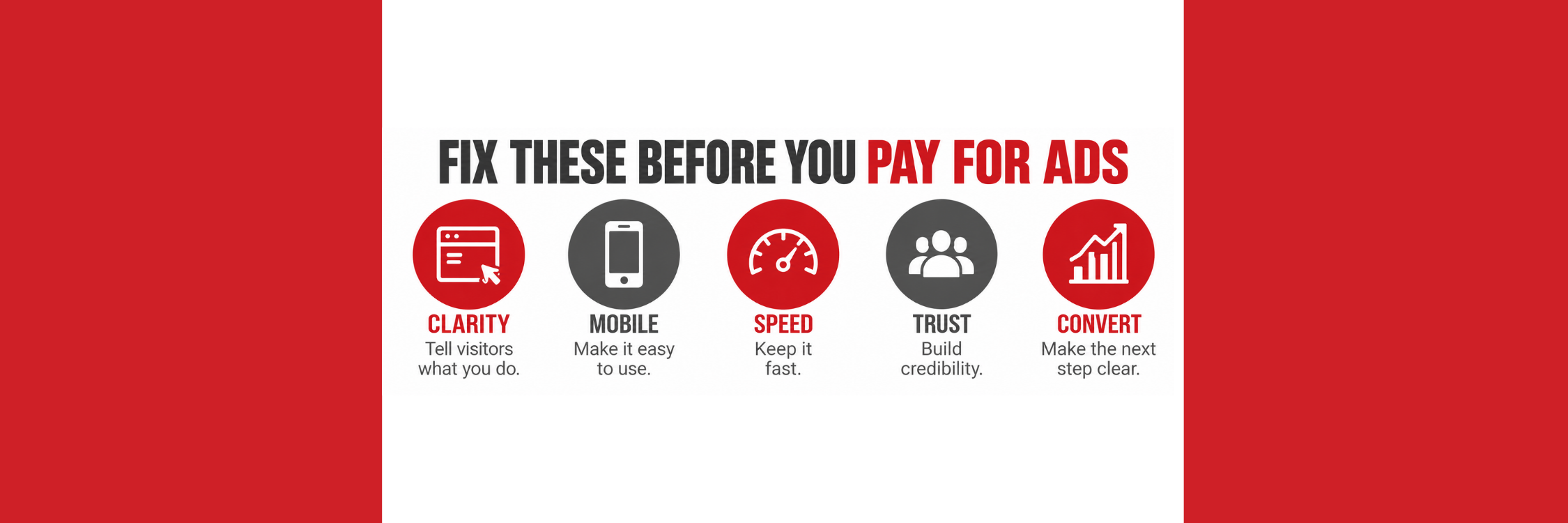
If your website is confusing, slow, difficult to navigate, hard to find in search, or missing a clear next step, paying for advertising can simply mean paying to send more people to a website that isn’t doing its job. Before you spend money on Google Ads, Meta Ads, or any other paid advertising, take a step back and make sure your website is ready. Here are the most important things to check.
1. Make Sure Visitors Know What You Do Immediately
When someone lands on your homepage, they shouldn’t have to figure out what your business does. Within a few seconds, a visitor should be able to understand:
- What you offer
- Who you help
- What problem you solve
- Why they should care
- What they should do next
For example, if you run a landscaping company in Myrtle Beach, a visitor shouldn’t have to figure out whether you serve residential customers, commercial properties, or vacation rentals.
Your headline plays a major role here. BE SPECIFIC. Instead of a vague statement like:
“Helping You Live Your Best Life”
a more specific headline might be:
“Holistic Nutrition Coaching for Women Ready to Feel Better Without Extreme Diets.”
The second version gives visitors context immediately. Your website doesn’t need to be clever. It needs to be clear.
2. Check Your Website’s Mobile Experience
This is especially important for local businesses because someone searching for a service while they’re out and about may be looking for your business from their phone. A large percentage of your potential customers will visit your website from their mobile electronic. That means your website needs to work just as well on a small screen as it does on your laptop. Open your website on your phone and actually use it like a potential customer would. Can you easily:
- Read the text?
- Navigate the menu?
- Click buttons?
- Fill out your contact form?
- Find your phone number?
- Understand your offer?
- Complete a purchase or inquiry?
Look for anything that makes the experience frustrating. A website that looks beautiful on desktop but is difficult to use on mobile can create unnecessary friction between your advertising and your conversion.
3. Make Sure Your Website Loads Quickly
Advertising gets people to your website. It doesn’t guarantee they’ll wait around for it to load. If your pages are slow, visitors may leave before they ever see your offer. Check your website’s performance and look for common issues such as:
- Oversized images
- Too many plugins
- Unnecessary scripts
- Poorly optimized videos
- Outdated themes or software
- Hosting limitations
You don’t necessarily need a technically perfect website. You do need a website that provides a reasonably fast and usable experience.
4. Give Every Page a Clear Purpose
One of the biggest website problems I see is that pages exist simply because “we thought we needed one.” Instead, every important page should have a job. For example:
Homepage: Introduce the business and guide visitors toward the next step.
Service page: Explain the service, its benefits, who it’s for, and how to get started.
About page: Build credibility and connection.
Blog: Educate visitors and attract relevant organic search traffic.
Contact page: Make it easy to take the next step.
Landing page: Focus attention on one specific offer or campaign.
Before advertising, ask yourself: “What do I want someone to do on this page?” If you don’t know, your visitor probably won’t know either.
5. Make Your Calls to Action Obvious
Don’t give your paid-traffic visitor five different things to do. Give them a clear next step. You shouldn’t make potential customers hunt for what to do next. Your website should clearly tell visitors what to do. Depending on your business, that could be:
- Book a consultation
- Request a quote
- Schedule an appointment
- Buy now
- Download a guide
- Join your email list
- Call your business
- Contact you
Don’t be afraid to repeat your call to action throughout a page. People may be ready to take action at different points in their journey. A clear CTA removes unnecessary friction.
6. Make Sure Your Website Builds Trust
Imagine someone clicks your ad. They don’t know you yet. Before they contact you or buy from you, they’re probably asking themselves: “Can I trust this business?” Your website should help answer that question. Look for opportunities to include:
- Testimonials
- Reviews
- Case studies
- Client results
- Credentials
- Certifications
- Relevant experience
- Professional photos
- Clear contact information
- Guarantees or policies, when appropriate
You don’t need dozens of testimonials. Even a few specific, credible examples can help potential customers understand what it’s like to work with you.
If you serve local customers, make it easy for people to see where you’re located and who you serve. Mention your service area naturally throughout your website, and make sure your contact information is easy to find.
7. Make Sure Your Website Is Search-Friendly
Paid advertising and SEO are different strategies, but your website still needs a strong foundation for organic search. At a minimum, review your:
- Page titles
- Meta descriptions
- Headings
- URLs
- Image alt text
- Internal links
- Website content
- Local business information
- Target keywords
And if you haven’t already, make sure you have the basic measurement tools in place. For many businesses, that includes Google Analytics and Google Search Console. You can’t make informed growth decisions if you don’t have visibility into what people are doing on your website.
8. Make Sure Your Landing Page Matches Your Ad
This is one of the most important things to check before launching a paid campaign.
Let’s say your ad says, “Get 20% Off Your First Consultation,” but the person clicks the ad and lands on your generic homepage. Now they have to search for the offer. That’s unnecessary friction. Instead, consider creating a landing page specifically designed around the campaign. The messaging should feel connected:
Ad → Landing Page → Offer → Call to Action
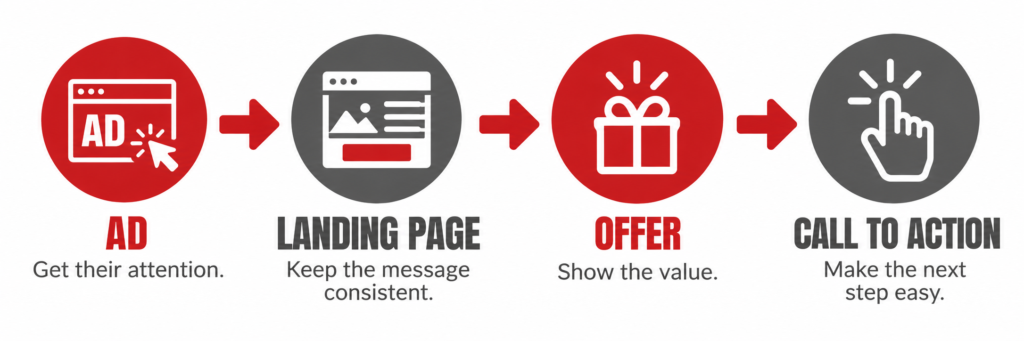
The visitor should immediately recognize that they’ve arrived at the right place.
9. Test Your Forms and Conversion Process
I have to tell you guys about this because I’m the biggest offender but have you asked yourself this simple question:
Have you actually tested your website’s contact form lately?
Submit it yourself. Then check:
- Did the form work?
- Did you receive the notification?
- Did the customer receive a confirmation?
- Does the thank-you page work?
- Is the next step clear?
- Are submissions being recorded somewhere?
Do the same thing with your checkout process, booking system, lead magnet, or other conversion points. There’s nothing worse than spending hundreds or thousands of dollars on advertising only to discover that your form wasn’t working.
10. Don’t Forget the Thank-You Page
Your conversion doesn’t necessarily end when someone submits a form. Your thank-you page is another opportunity to move the relationship forward. Depending on your business, you could:
- Explain what happens next
- Encourage the visitor to book a call
- Offer a related resource
- Invite them to join your email list
- Direct them to helpful content
- Reinforce your value proposition
Think of the thank-you page as the beginning of the next step—not the end of the journey.
So, What Should You Fix First?
If you’re preparing to spend money on advertising, I recommend looking at your website in this order:
1. Conversion: Can visitors understand your offer and take action?
2. User Experience: Is the website easy to navigate and use on mobile?
3. Trust: Does your website give visitors enough reason to believe in your business?
4. Technical Performance: Does the site load properly and work without frustrating visitors?
5. SEO & Visibility: Can search engines understand your website and connect it with relevant searches? Learn more about SEO for small businesses.
6. Measurement: Do you have the analytics and tracking you need to understand what’s happening?
Once those foundations are in place, advertising can become much more useful.
Don’t Pay to Send Traffic Through a Leaky Funnel
Here’s the bigger lesson: Advertising amplifies what’s already happening. If your website converts well, advertising can help you get more people into a system that’s already working.
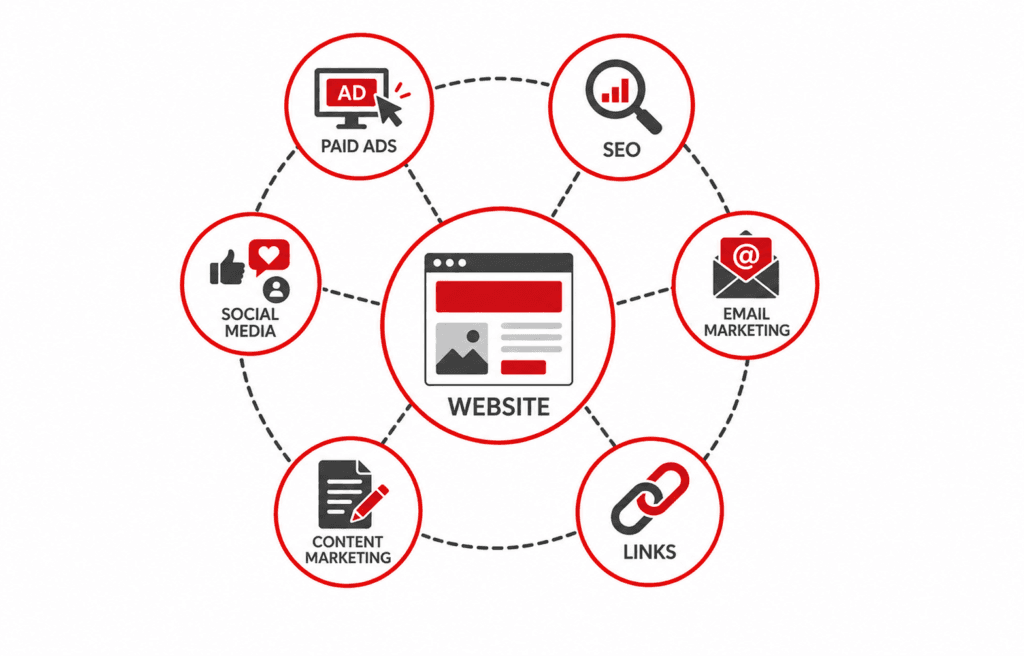
However, if your website is confusing or difficult to navigate, advertising may simply bring more people into a system that isn’t ready for them. That’s why I believe growth marketing starts with the foundation. Before asking:
“How much should I spend on ads?”
Ask:
“Is my website ready for the traffic I’m about to pay for?”
That question could save you a lot of money.
What Myrtle Beach Small Businesses Should Check Before Advertising
Marketing in Myrtle Beach comes with its own considerations. Depending on your business, you may serve year-round residents, seasonal visitors, tourists, second-home owners, or a combination of audiences.
Before launching a campaign, make sure your website makes it clear:
- Where you serve
- Who you serve
- What you offer
- Whether you serve locals, visitors, or both
- How someone can contact or book you
- What makes your business different
If you’re targeting customers in Myrtle Beach, North Myrtle Beach, Surfside Beach, Conway, or elsewhere along the Grand Strand, your website should make your service area clear without creating a page stuffed with city names.
Ready to Find Your Website’s Growth Leaks?
Before you spend money driving more traffic to your website, start with my free Website Growth Audit.
It’s designed to help you spot potential growth leaks across your website so you can see what may be getting in the way of attracting visitors, building trust, and turning those visitors into customers.
Because sometimes you don’t need more traffic. You need more from the traffic you’re already getting.
Your website is more than your online business card. It’s part of your sales and marketing system. Before you pay to send hundreds—or thousands—of people to it, make sure that system is ready to do its job.
And if you want help turning those findings into a prioritized growth strategy, you can learn more about my Growth Roadmap.